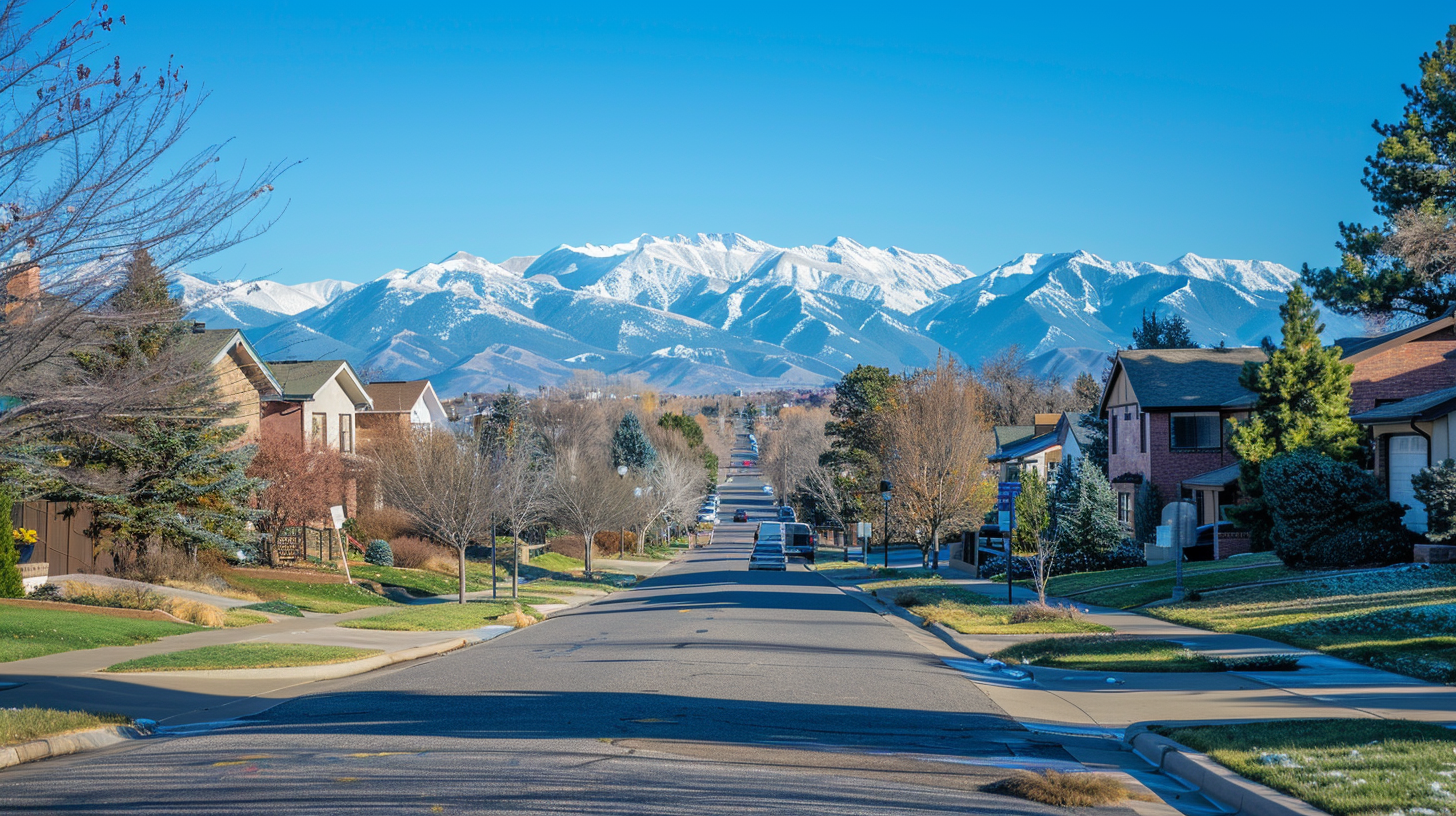
Wildlife Control in Denver and the Front Range: Where Mountain Meets Suburb
The Colorado Front Range — stretching from Fort Collins through Denver, Aurora, and Colorado Springs — is one of the fastest-growing corridors in the American West. Cities like Castle Rock, Littleton, Lakewood, Golden, and Parker have pushed residential development directly into wildlife habitat along the mountain-plains transition zone. The result is an increasing number of encounters between homeowners and bears, mountain lions, rattlesnakes, prairie dogs, raccoons, and skunks — and a growing need for professional dead animal removal services.
Front Range Wildlife: What You Will Encounter
Black Bears
Colorado Parks & Wildlife (CPW) estimates there are 17,000–20,000 black bears in the state, and bear encounters along the Front Range have increased dramatically as development expands into foothill communities. Evergreen, Conifer, Bailey, and the western edges of Lakewood, Golden, and Boulder see the most bear activity. Bears that enter garages, crawlspaces, and even homes occasionally die in enclosed spaces — particularly juveniles that become trapped. A dead bear is a major removal challenge due to size (adult black bears weigh 200–400+ pounds) and the need for coordination with CPW, which tracks all bear mortality. If you find a dead bear on your property, contact CPW (303-291-7227) immediately.
Mountain Lions
Colorado's mountain lion population is estimated at 3,800–4,500 animals, and sightings along the Front Range have become routine in communities like Castle Pines, Roxborough, Ken Caryl, and the foothills of Jefferson County. Dead mountain lions on residential property are rare but do occur — typically from vehicle strikes or natural causes. Mountain lions are classified as big game under Colorado law, and all mortality must be reported to CPW. Do not approach or move a dead mountain lion.
Rattlesnakes
The western rattlesnake (Crotalus viridis) is found throughout the Front Range from the plains up to approximately 9,000 feet elevation. Rattlesnake encounters peak from April through October in foothill and mesa communities — particularly in Douglas County (Castle Rock, Highlands Ranch, Parker) and Jefferson County (Morrison, Evergreen, Littleton). As with all rattlesnakes, the reflexive bite risk persists after death. Prairie rattlesnakes are also common on the eastern plains edges of Aurora, Commerce City, and Brighton.
Prairie Dogs
Black-tailed prairie dogs are native to the Front Range grasslands and exist in large colonies throughout open spaces in Broomfield, Westminster, Thornton, and Aurora. While live prairie dog management is a separate issue, dead prairie dogs can be a public health concern: Colorado is one of the states where plague (Yersinia pestis) is endemic in prairie dog populations. CPW and county health departments monitor prairie dog colonies for plague die-offs. If you observe multiple dead prairie dogs on or near your property, contact your county health department immediately — this may indicate an active plague outbreak.
Raccoons, Skunks, and Fox
Raccoons and striped skunks are common across all Front Range communities, denning in attics, crawlspaces, and under decks. Red fox have adapted particularly well to suburban Denver neighborhoods. All three species are rabies vectors. The Colorado Department of Public Health and Environment (CDPHE) monitors rabies statewide, with skunks being the most commonly reported rabid terrestrial animal in Colorado.
Colorado Regulations and Agencies
Colorado Parks & Wildlife (CPW) is the primary wildlife management agency:
- Most nuisance wildlife (raccoons, skunks, opossums, rabbits, rodents) can be removed from your property without a permit.
- Bears, mountain lions, and deer are classified as big game. All mortality — including animals found dead on private property — must be reported to CPW.
- Rattlesnakes are not protected in Colorado and can be killed on your property, but CPW encourages relocation when safe.
- Bats — Colorado is home to 18 bat species, several of which are protected. Dead bats should be reported, especially if found inside a home, as rabies testing may be warranted.
County Resources:
- Douglas County — Environmental Health Division (303-663-7650) handles nuisance wildlife complaints and rabies concerns for Castle Rock, Parker, Highlands Ranch, and Lone Tree.
- Jefferson County — Public Health (303-232-6301) manages rabies surveillance for Lakewood, Golden, Arvada, Wheat Ridge, and Evergreen.
- Arapahoe County — Public Health (303-795-4584) covers Aurora, Centennial, Englewood, Littleton (unincorporated), and Greenwood Village.
- Denver Department of Public Health & Environment — (720-913-1311) handles wildlife and dead animal concerns within Denver city limits.
Altitude and Climate Factors
The Front Range's semi-arid climate and altitude (5,000–7,000+ feet) create some unique dead animal removal considerations:
- Dry air slows decomposition compared to humid climates, but summer daytime temperatures in the 90s still accelerate the process significantly
- Attic temperatures in Front Range homes can exceed 130 degrees Fahrenheit in summer despite the relatively mild ambient temperatures
- Extreme temperature swings — a 40-degree temperature difference between day and night is common, causing decomposition gases to expand and contract, pushing odor further into living spaces through wall cavities and HVAC systems
- Winter freezing can preserve a carcass for weeks, only to release a sudden, intense odor during a warm chinook wind event or when the furnace heats the space
The Unique Challenge of Mountain-Suburb Interface
Communities in the wildland-urban interface (WUI) — Castle Pines, Conifer, Evergreen, Genesee, Ken Caryl — face wildlife encounters that purely urban or suburban areas do not. Homeowners in these areas should be prepared for:
- Larger animals (bears, deer, elk, mountain lions) that can cause significant property damage and present serious removal challenges when they die on or near structures
- Greater distance from service providers, which can extend response times
- Steeper terrain and limited access that increases removal costs
- HOA and covenant restrictions that may affect how quickly you can address the situation
When to Call a Professional
Call a licensed wildlife control professional immediately if:
- The dead animal is a bear, mountain lion, or deer (CPW notification required)
- The animal is in an enclosed space — attic, wall, crawlspace, or chimney
- Multiple dead prairie dogs are found near your property (possible plague)
- The animal is a rattlesnake (reflexive bite risk)
- The dead animal is a bat found inside your home (rabies testing required)
- You are in a WUI community and the animal exceeds 25 pounds
Professional dead animal removal along the Front Range typically costs $150–$500, with larger animal removals (bear, deer) costing more due to equipment and CPW coordination requirements.
Protect your family and comply with Colorado law. Search Vulture Clean to connect with a licensed dead animal removal professional serving Denver, Lakewood, Aurora, Castle Rock, Littleton, Golden, Arvada, or anywhere along the Front Range. Same-day service is available in most metro-area communities.