Spring Baby Season: Why You Should Never Evict Wildlife from Your Attic in March–August
Every spring, homeowners discover they have uninvited tenants — raccoons in the attic, squirrels in the soffit, skunks under the deck. The instinct is to get them out immediately. Trap them, block the hole, problem solved.
But between March and August, that instinct creates a much worse problem. The animal you are hearing is almost certainly a mother with dependent young. Remove or exclude the mother, and her babies — too young to follow her — starve and die in your walls, ceiling, or ductwork. Instead of one live animal you can hear, you now have multiple dead animals you cannot reach.
The Humane Society of the United States is direct about this: between March and August, assume any animal denning in your home is a mother with dependent young, even if you only see one animal.
When Baby Season Happens, by Species
Not all species give birth at the same time. Here is the breakdown for the most common nuisance wildlife in U.S. homes:
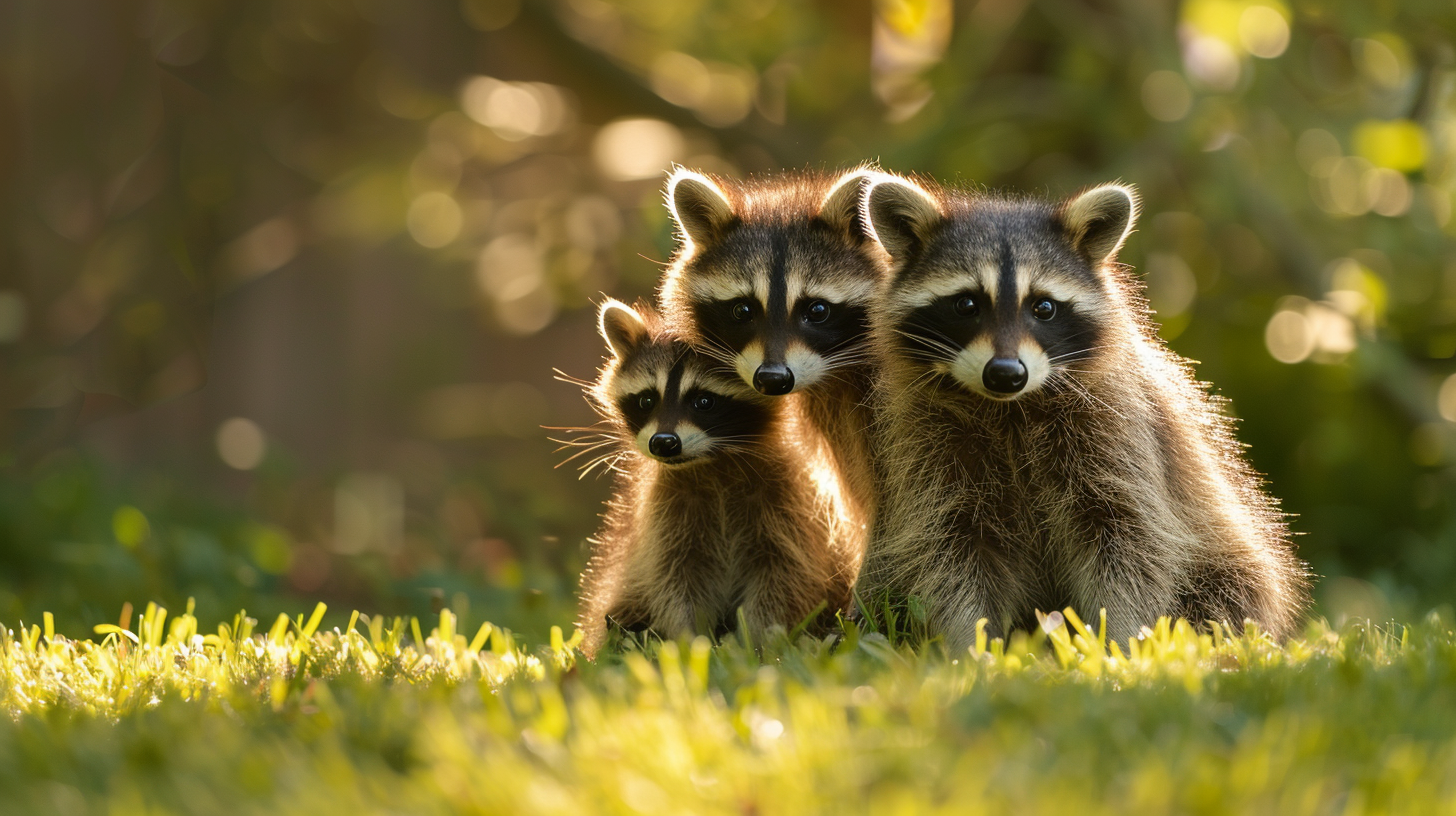
Raccoons — Breed in late winter (mostly February). After a 63-day gestation, births peak in April and May. Late breeders may give birth into June or even August. Litters average 2–5 kits. The young are completely dependent on the mother for their first 8–10 weeks.
Eastern Gray Squirrels — Have two breeding periods per year: late winter and mid-summer. Births occur in late February through early April and again in July and August. Litters average 2–4. Gestation is 40–45 days. Squirrel nests in attics during spring are almost always maternity nests.
Striped Skunks — Breed in late February through March. After a 59–77 day gestation, births peak in May and early June. Litters are large — 4–8 kits, sometimes up to 10. Kits are born blind and helpless and remain in the den for about 8 weeks.
Virginia Opossums — Have two breeding seasons: January through March and mid-May through early July. Gestation is remarkably short — only 12–13 days — but the young crawl into the mother's pouch and remain there for about 2 months, then ride on her back for several more weeks. Weaning takes about 105 days total.
House Mice — Breed year-round, with peak activity in spring and fall. A single female can produce 5–10 litters per year with 5–6 pups each. Gestation is only 19–21 days, and young reach sexual maturity in 6–10 weeks. This means mouse problems compound rapidly.
Norway Rats — Also breed year-round, most actively in spring and fall. A female can produce 3–8 litters per year averaging about 8 pups each. Gestation is 21 days. Like mice, rat populations grow exponentially when left unchecked.
Bats — Maternity colonies form in spring. Pups are born in late May through early July. Most species produce only 1 pup per female (big brown bats may have 1–2). Pups cannot fly for 3–5 weeks and are not fully independent for 8–12 weeks. Maternity colonies disband in late summer or early fall.
What Goes Wrong When You Remove the Mother
Scenario 1: You trap and relocate the mother.
Her babies are still in your attic or wall. They cannot feed themselves, cannot regulate their body temperature, and cannot leave the den. Within 24–72 hours, they begin to starve. Within a week, they are dead. A litter of 4–6 baby raccoons decomposing in a ceiling void produces a severe, sustained odor that can last weeks — far worse than a single adult carcass, because multiple animals decompose at slightly different rates, extending the duration of the problem.
Scenario 2: You install a one-way door.
The mother exits and cannot get back in. The babies are trapped inside. Same result as Scenario 1. One-way exclusion devices are an excellent tool — but only after the young are old enough to leave on their own, or after the family has been confirmed to have vacated.
Scenario 3: You block the entry hole.
A desperate mother will cause significant property damage trying to get back to her young. Raccoons can tear through roof shingles, soffit panels, and fascia board. Squirrels will gnaw through wood, plastic, and even aluminum flashing. You end up with a bigger hole than you started with — and the mother gets back in anyway.
The Humane Society recommends against live trapping during baby season entirely. They cite a study of relocated gray squirrels that found relocated animals had extremely poor survival rates in unfamiliar territory. Trapping and relocating is often a death sentence for the animal and guarantees orphaning of the young.
Bats Are a Special Case — Federal Law Applies
Several bat species are protected under the Endangered Species Act:
- The northern long-eared bat is listed as endangered
- The Indiana bat is listed as endangered
- The tricolored bat has been proposed for endangered listing
Under ESA Section 9, it is unlawful to "take" (harass, harm, pursue, hunt, kill, trap, or capture) any endangered species. During pup season — generally June 1 through July 31 — even trees within 150 feet of known maternity roost sites are protected from removal.
Beyond federal law, many states independently prohibit bat exclusion during maternity season, typically May through August. The Humane Society is explicit: do not evict bats between May and August. The best time for bat exclusion is early autumn, after the young can fly and before hibernation begins.
Excluding a maternity colony of bats during pup season means flightless pups are trapped inside your home. They will die in your walls. Depending on colony size, this can mean dozens of dead bats decomposing in inaccessible spaces — with the associated odor, fly infestations, and potential for histoplasmosis from accumulated guano.
What to Do Instead
The Humane Society recommends a humane eviction approach during baby season:
Step 1: Confirm the species. Different animals respond to different deterrents. A wildlife professional can identify the species from tracks, droppings, entry points, and sounds.
Step 2: Use gentle harassment. Place bright lights (a work lamp or string lights) near the den area. Add a radio playing talk radio. Place rags soaked in apple cider vinegar near the entry point. The combination of light, noise, and smell makes the den site uncomfortable. A mother raccoon or squirrel will typically relocate her young to a backup den within 1–3 days.
Step 3: Wait and monitor. After harassment, watch the entry point at dusk for 2–3 days. When you see the mother leaving and no longer returning, the family has likely relocated.
Step 4: Seal the entry point. Only after confirming the den is empty. Use hardware cloth, galvanized steel, or metal flashing. Animals remember good den sites and will attempt to return the following year if the entry is not permanently sealed.
Step 5: If you cannot wait, call a licensed wildlife control professional who practices humane eviction. A qualified professional can manually check for young, reunite them with the mother outside, or transport the entire family together. This is the only safe approach when you need the animals out immediately during baby season.
The Dead Baby Problem
When baby animals die in walls or attics, the result is worse than a single adult carcass for several reasons:
- Multiple carcasses decomposing simultaneously amplifies the odor
- Staggered decomposition — each baby reaches peak odor at a slightly different time, extending the total duration of the smell
- Inaccessible locations — babies are often deep in wall voids or insulation where even professionals struggle to reach them
- Secondary pest infestations — dead animals attract blow flies, flesh flies, dermestid beetles, and other insects that can persist long after the carcasses are consumed
A single dead adult squirrel in a wall typically produces noticeable odor for about a week. A litter of 4 baby squirrels can produce a compounding odor problem that lasts 2–3 weeks or longer, particularly in humid conditions.
The Bottom Line
Between March and August, patience is almost always the cheapest and most effective strategy. The denning season is short. A raccoon family will typically leave an attic on their own within 8–10 weeks of birth. Squirrels are faster — often 6–8 weeks. If you can wait, wait. The family will leave, and then you seal the entry permanently.
If you cannot wait, or if you are unsure what species you are dealing with, call a professional who understands baby season protocols. Search Vulture Clean to find a licensed wildlife removal professional in your area who will handle the situation humanely and prevent the far worse outcome of dead animals in your walls.