Found a Dead Bird? What to Do (and What Not to Do)
You step outside and find a dead bird on your porch, in your yard, or on a windowsill. It happens constantly — building collisions alone kill over a billion birds annually in the United States, according to a peer-reviewed study cited by the American Bird Conservancy. Add in cats, disease, vehicle strikes, and poisoning, and dead birds are one of the most common wildlife encounters homeowners face.
But a dead bird is not the same as a dead mouse or a dead squirrel. Birds carry specific diseases that require caution, and most bird species in the U.S. are federally protected — even when dead. Picking one up without understanding the rules can expose you to pathogens or, technically, put you on the wrong side of federal law.
Here is what you need to know.
Diseases Dead Birds Can Carry
Avian Influenza (H5N1 / HPAI)
Highly pathogenic avian influenza is widespread in wild birds worldwide. The CDC reports that wild birds can carry HPAI and show no signs of illness. While the current public health risk to the general population is assessed as low, the CDC's active guidance is clear: do not handle sick or dead wild birds. Human cases in the U.S. have occurred among dairy and poultry workers with direct occupational exposure.
Salmonella
The CDC documented a multistate outbreak of Salmonella Typhimurium — 30 illnesses across 12 states — linked to direct handling of sick and dead songbirds and indirect contact with contaminated bird feeders. Birds can carry salmonella while looking healthy. People get sick by touching their mouths with unwashed hands after contact with wild birds, feeders, or bird baths.
West Nile Virus
West Nile virus has been detected in over 300 species of dead birds since 1999. Crows and jays are especially susceptible and commonly die from infection. However, the CDC states there is no evidence that a person can get infected from handling live or dead infected birds — the virus is transmitted to humans through mosquito bites. That said, bare-handed contact should still be avoided as a general hygiene precaution.
Histoplasmosis
Histoplasmosis is caused by breathing spores of the fungus Histoplasma, found in soil enriched with bird or bat droppings. The CDC notes that fresh bird droppings on surfaces like sidewalks and windowsills likely do not pose a risk. The real danger comes from disturbing large accumulations of droppings in soil, particularly in the Ohio and Mississippi River Valleys. This is more of a concern with pigeon roosts and starling colonies than with a single dead bird.
How to Safely Handle a Dead Bird
The CDC recommends the following for the general public:
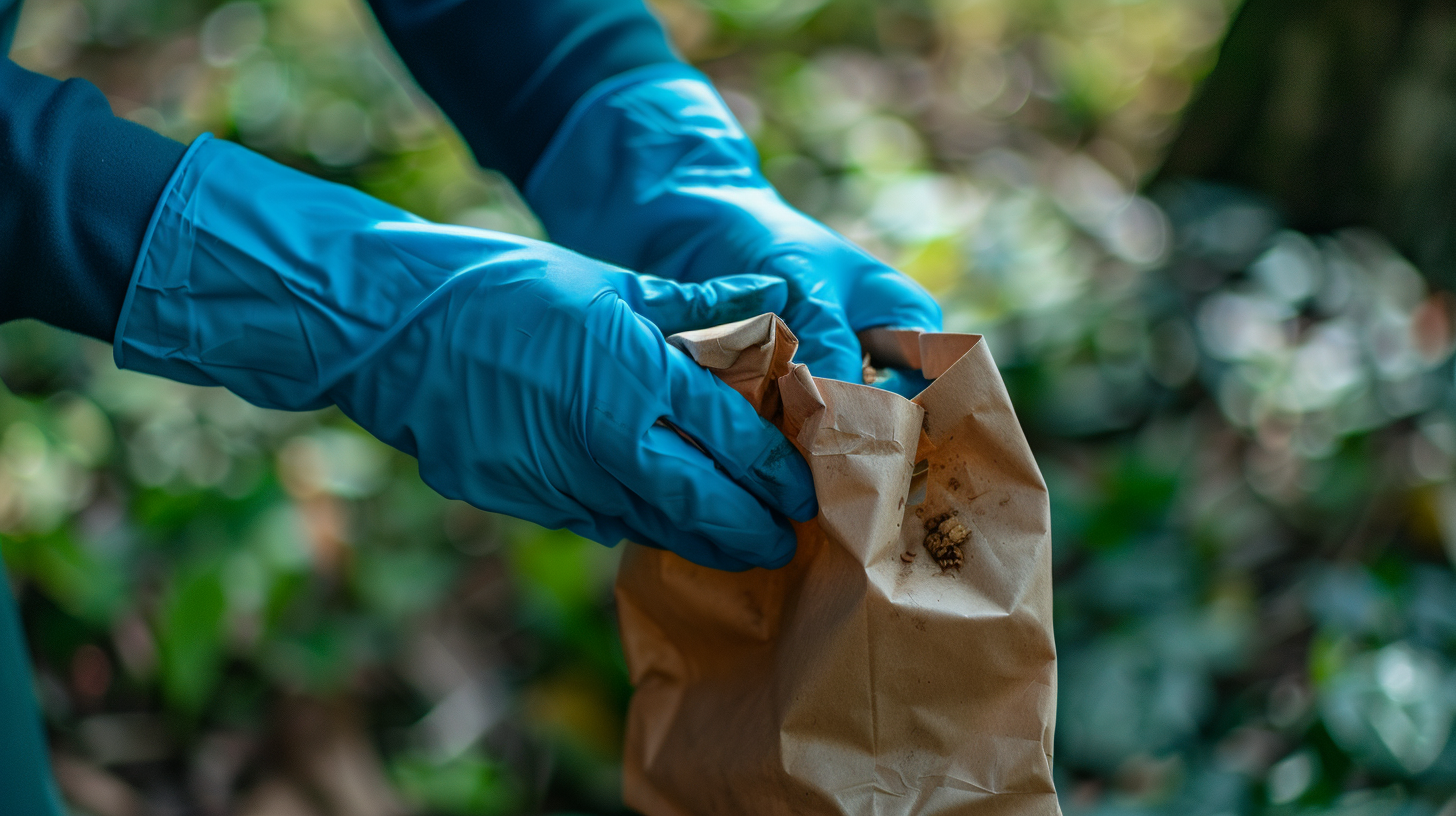
- Do not touch the bird with bare hands. Use disposable gloves or an inverted plastic bag (like picking up after a dog).
- Place the bird in a sealed plastic bag. Double-bag if possible.
- Dispose of it in your regular trash. Tie the bag securely.
- Wash your hands thoroughly with soap and water, even if you wore gloves.
For anyone with higher exposure — wildlife workers, hunters, anyone handling multiple birds — the CDC recommends upgraded protection: N95 respirator, unvented safety goggles, disposable gloves, and boots or boot covers.
Should You Report It?
Sometimes, yes. Dead bird reporting is one of the key methods used to monitor the spread of West Nile virus and avian influenza in the environment.
Contact your state wildlife conservation agency first. They will tell you whether the bird should be tested and how to submit it. At the federal level, the USGS National Wildlife Health Center coordinates wildlife disease surveillance through the WHISPers system (Wildlife Health Information Sharing Partnership), tracking mortality events nationwide.
Report a dead bird if:
- You find multiple dead birds in the same area (possible disease event or poisoning)
- The bird is a raptor (hawk, eagle, owl) — secondary poisoning from rodenticides is a growing problem
- You are in an area with active avian flu or West Nile advisories
- The bird appears to have died from illness rather than trauma (no visible injury, window strike, or cat attack)
The Law: Most Dead Birds Are Federally Protected
This surprises many people. Under the Migratory Bird Treaty Act (MBTA), it is unlawful to take, kill, or possess migratory birds — including dead birds, their parts, feathers, nonviable eggs, and inactive nests. The 2023 MBTA protected species list covers over 1,000 bird species in the United States.
There is a limited exception for the general public: you may pick up a dead migratory bird found opportunistically, but you must either donate the specimen to an authorized entity or completely destroy it (burial or disposal in trash) within 7 calendar days. You may not keep a dead bird, its feathers, or any part of it for personal use.
This means that collecting feathers, mounting a found bird, or keeping a skull is technically a federal violation. The law is rarely enforced against homeowners disposing of a bird they found in their yard, but it is worth understanding.
Common Dead Bird Scenarios
Window Strikes
Most fatal bird collisions happen at homes and buildings shorter than four stories. The U.S. Fish and Wildlife Service identifies window strikes as one of the two largest human-caused sources of bird deaths in the country (along with domestic cats). If you regularly find dead birds near the same window, consider adding window decals, screens, or UV-reflective tape to break up the reflection.
Birds in Dryer Vents
Birds — especially starlings and house sparrows — frequently nest in dryer vent openings. When they get trapped inside the vent duct, they die and begin decomposing. The first sign is usually a smell or reduced dryer performance. The fix is removal of the carcass followed by installation of a proper vent cover with a bird guard.
Birds in Chimneys
Chimney swifts are a neotropical migratory bird protected under the MBTA. If chimney swifts are nesting in your chimney, it is illegal to disturb, harass, injure, or kill them, their eggs, or their nests. You must wait until nesting is complete and the birds have left before installing a chimney cap. If nestling birds fall from a chimney, contact a licensed migratory bird rehabilitator in your state.
Raptors and Rodenticide Poisoning
When rodents consume anticoagulant rodenticides and are then eaten by hawks, owls, or eagles, the toxins bioaccumulate — a process called secondary poisoning. Studies have found alarming exposure rates among birds of prey. Second-generation anticoagulant rodenticides can persist in a raptor's body for months. If you find a dead hawk, owl, or eagle, report it to your state wildlife agency. Do not handle it without gloves.
When to Call a Professional
Handle a single dead bird in your yard yourself using the glove-and-bag method described above. Call a professional if:
- A bird has died inside your home — in a wall, vent, chimney, or attic
- You find multiple dead birds (possible disease event requiring investigation)
- The bird is a raptor or other large species you are uncomfortable handling
- There is an active nest with eggs or young that needs to be managed legally
- The dead bird has caused a secondary problem — odor, flies, staining
Search Vulture Clean to find a wildlife removal professional in your area who can handle dead bird removal safely, legally, and with proper disposal.